Skip to content

Treating melasma
Practical Information
- Chemical peel;
- Microneedling with dermatological active ingredients;
- At-home skincare and compounded medication, subject to assessment during consultation.
Click here to scroll down to the specialists’ section.

Treatments for Melasma
1. Chemical Peeling
Chemical peel is a facial rejuvenation treatment that can improve or eliminate skin blemishes and imperfections, such as acne, scars or fine wrinkles.
Chemical peel is widely used in the treatment of melasma, as it helps lighten dark patches and even out skin tone. It is particularly effective in cases of epidermal melasma, where the melanin pigment is located more superficially in the epidermis.
The procedure involves applying acidic solutions to the skin to promote cell renewal. The choice of agents and the depth at which the peel will act are determined according to the skin type and diagnosis.
Melasma treatment with chemical peel aims to remove the superficial layers of the skin and promote the regeneration of healthier, more even skin. This helps reduce the concentration of dark pigment in the affected areas.
Chemical peel is performed by a doctor, such as a dermatologist or a doctor specialised in Aesthetic Medicine.
2. Microneedling with Dermatological Active Ingredients
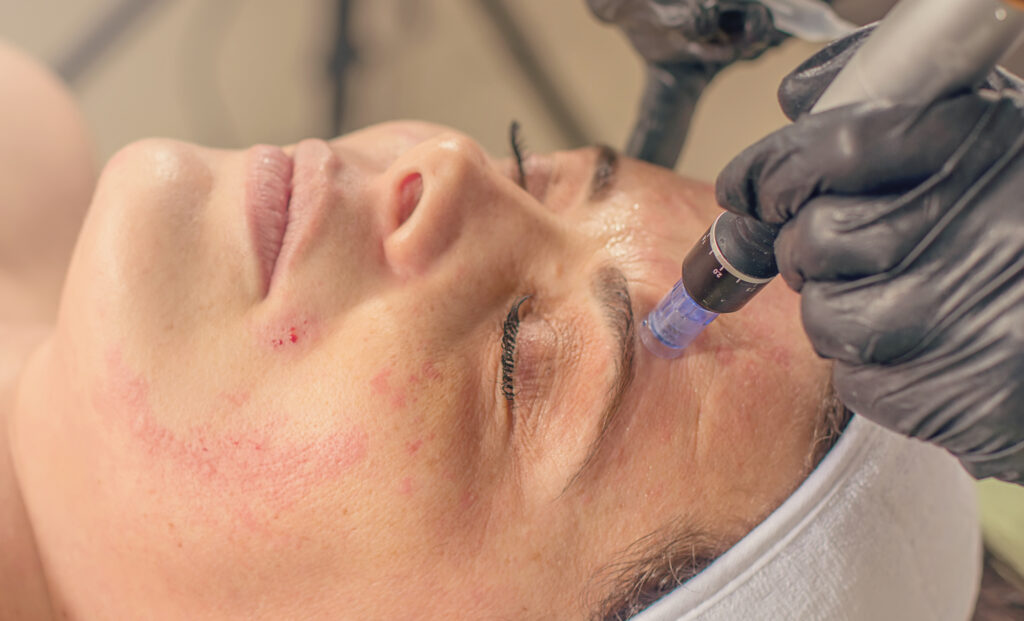
Microneedling with dermatological active ingredients is a procedure that involves using a device with tiny needles to puncture the skin while applying dermatological active ingredients to the skin. This technique can be used to treat melasma in several ways:
- The micro-perforations created during microneedling allow the dermatological active ingredients to penetrate deeper into the skin;
- Microneedling also stimulates skin regeneration, increasing collagen and elastin production. This can help improve the texture and overall appearance of skin affected by melasma;
- The combination of microneedling with dermatological active ingredients helps reduce the concentration of dark pigment in the areas affected by melasma, leading to more even pigmentation.
3. At-home skincare and compounded medication
The foundation of melasma treatment is sun protection. In addition, depigmenting agents for at-home use may also be recommended. In this context, compounded dermatological products can be a useful option in the treatment of melasma.
Compounded formulations allow the treatment composition to be personalised, helping to increase its effectiveness.
The choice of active ingredients and their concentrations is based on the type of melasma, the severity of the condition and the patient’s individual characteristics.
Note: A specialized dermatological evaluation is always conducted in order to recommend the most appropriate solution for your specific case (which may be one of the options mentioned above or another recommended by the doctor).
What is the cost of melasma treatments?
There will always be a prior assessment so that the doctor can recommend the most appropriate melasma treatment for your specific case, as well as the respective cost.
Prices may vary depending on the type of treatment and the number of sessions recommended.
Book a consultation to receive a personalised quote.
What our clients say about us
“I couldn’t thank Dr. Paola (dermatologist) enough for her care and kindness. She explained the procedure (CO2 laser) to me, the post-procedure care, and answered my questions. I had already had the same procedure at another clinic, but it didn’t compare to the treatment I received with this doctor…she was very dedicated and friendly. And […]
“I really enjoyed my experience at this clinic. The staff is conscientious and professional. The results were excellent and they give us a realistic view of what’s expected so we can manage expectations. I’m really satisfied!”
“Dr. Francisco Martins De Carvalho doesn’t overlook the smallest detail. He seeks perfection and finds it. A unique and sublime talent. I woke up with the body of a teenager (I’m 41). Thank you for making me smile.”
“My husband and I were seen by Dr. Paola, who was wonderful and very attentive to every detail. I highly recommend her.”
“I’ve been coming here for a while now and love my experience. The people are accommodating friendly and very professional. I’m happy with the results and it has lived up to my expectations! I shall continue to visit this clinic and I highly recommend it.”
“Super professional and top-quality team. I saw results after the first session.”
“One of the best surgeons, I’m so grateful for the excellent work he did with me! A perfectionist!! I couldn’t be happier with the results! Thank you, Dr. Francisco Carvalho!”
About Melasma
What is melasma?
Melasma is characterised by the appearance of dark, brownish and irregular patches on the skin, mainly on the face and more frequently in women. Although it is a benign condition, it can have a significant aesthetic impact and affect the confidence of those who have it.
What types of melasma are there?
There are different types of melasma based on their distribution and location within the layers of the skin. The main types of melasma are:
- Epidermal melasma: This is the most common type of melasma. The dark patches occur in the outermost layer of the skin, known as the epidermis. These patches are more superficial and generally respond better to treatments.
- Dermal melasma: In this type, the dark patches are mainly located in the dermis, the deeper layer of the skin. Dermal melasma can be more difficult to treat and may require more treatment sessions, as the patches are located below the epidermis.
- Dermoepidermal melasma: In this type, the dark patches occur both in the epidermis, the most superficial layer, and in the dermis, the deeper layer of the skin.
What are the main causes of melasma?
Melasma can have several causes, including:
- Sun exposure;
- Hormonal changes;
- Genetic predisposition;
- Use of oral contraceptives;
- Use of certain cosmetic products and make-up;
- Side effects of certain medication;
- Among others.
Frequently Asked Questions
How common is melasma in women?
Melasma is very common, especially among pregnant women.
Around 15% to 50% of pregnant women develop melasma. Between 1.5% and 33% of the population may have melasma, and it occurs more frequently during a woman’s reproductive years and rarely during puberty. It usually begins between the ages of 20 and 40.
Are there laser treatments for melasma?
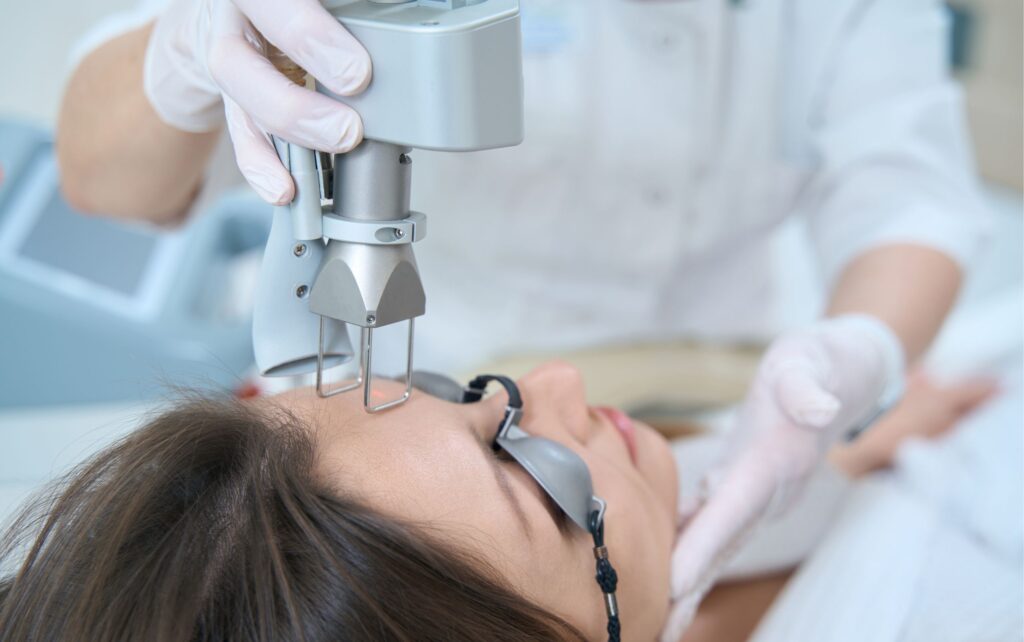
Yes, there are also laser treatments for melasma, such as Fractional CO2 Laser. The treatments mentioned above are the most common in patients with melasma, but other treatments may be recommended, such as laser or Intense Pulsed Light, if the dermatologist considers them more effective for your specific case.
Is it possible to permanently eliminate melasma?
As melasma is a chronic condition, eliminating it permanently is not always possible. However, the recommended treatments can significantly reduce these dark patches.
Complete elimination of melasma may not be achieved in all cases, but it is certainly possible to improve its appearance.
Is melasma cancerous?
Melasma is not cancerous, it is not a “sign of cancer”, nor is it a skin condition that “turns into” cancer. However, there are skin cancers that can cause patches similar to melasma, so a consultation with a dermatologist is recommended to confirm the correct diagnosis.
Where can melasma appear?
Melasma can appear on various areas of the body, but it is most common on the face, including the forehead, cheeks, nose, chin and above the lips. In addition to the face, melasma can, in less common cases, appear on other areas of the body that are frequently exposed to the sun. These areas may include, for example, the neck, back, arms and shoulders.
How can melasma be prevented?
At present, melasma cannot be completely prevented in people who develop it due to their genetics, skin colour type and hormonal changes, such as those associated with pregnancy. However, avoiding direct sun exposure during peak hours, using high-SPF sunscreens and avoiding hormonal medication whenever possible may help protect against melasma flare-ups and reduce recurrence after treatment. Strict sun protection is the foundation of any melasma treatment plan.
Specialists
Where can I get melasma treatment in Porto?
You can undergo melasma treatments at Living Clinic, located at Av. da Boavista 117, 6th floor, Room 607, 4050-115 Porto, Portugal.
Schedule a consultation to hear our recommendation for your specific case and clarify all your questions.