Skip to content

Practical Information
- Morpheus8;
- EMSCULPT NEO;
- EMTONE;
- Body Radiofrequency;
- BodyTite;
- Surgical Mommy Makeover;
- Non-Surgical Mommy Makeover.
Click here to scroll down to the specialists’ section.

Treatments for postpartum belly sagging
At Living Clinic, we offer a range of body treatments designed to address the main changes that can occur after pregnancy, helping to improve skin firmness, body contour, muscle tone and skin texture.
Surgical Treatments
1. Mommy Makover
After childbirth, women’s bodies often undergo changes that can cause significant discomfort. In the breast area, due to weight gain, increased volume and breastfeeding, there may be a significant increase in breast size which then decreases as weight is lost. This can lead to excess skin, giving the breasts a sagging appearance, or to atrophy of the mammary gland.
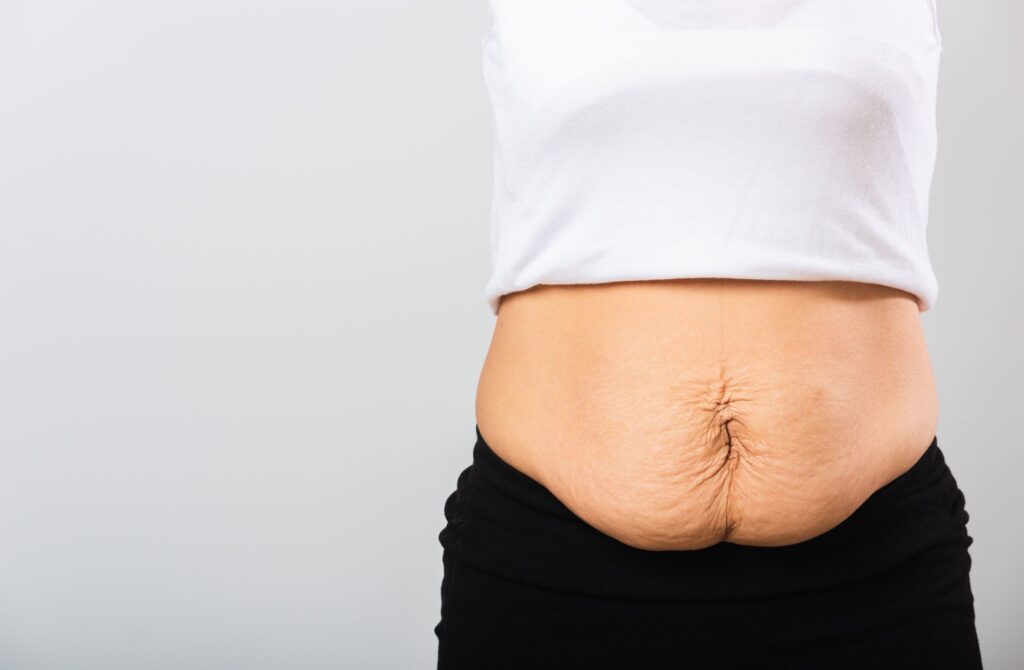
In the abdominal area, the main concerns are usually sagging and excess skin, sometimes stretch marks, an “apron belly” appearance, and changes in the shape of the navel. These changes can have a negative impact on a woman’s self-esteem.
A Mommy Makeover is a combination of aesthetic surgery procedures designed to help women restore the body they had before pregnancy.
The most commonly performed surgeries are abdominoplasty, to remove loose skin and restore firmness in the abdominal area, and breast enhancement, which may include a breast lift and/or breast augmentation – mastopexy or breast augmentation surgery. Liposuction may also be included to help sculpt the body.
At Living Clinic, we perform these surgeries. Book a consultation to clarify all your questions with our plastic surgeon.
Non-Surgical Treatments
At Living Clinic, we also offer effective non-surgical treatments (non-invasive or minimally invasive) to help restore firmness and define the abdominal area that has become more saggy after pregnancy, including:
1. Morpheus8
Using fractional radiofrequency and microneedling, Morpheus8 stimulates collagen production and improves skin texture, helping to achieve a firmer appearance.
2. EMSCULPT NEO
EMSCULPT NEO combines radiofrequency and high-intensity electromagnetic energy to tone the muscles and reduce localised fat, promoting a more sculpted and firmer appearance. In addition to improving sagging, this treatment can also help reduce the postpartum belly.
4. Body Radiofrequency (Plus)
Body Radiofrequency Plus is a body contouring treatment that stimulates collagen and elastin production, resulting in firmer and more toned skin.
Non-Surgical Mommy Makeover Package (Postpartum Recovery)
The experience that Living Clinic specialists have acquired over time in the field of aesthetic postpartum recovery has allowed us to understand that there is a set of non-invasive treatments which, when combined, can achieve results that would otherwise be very difficult to obtain.
For this reason, Living Clinic created a non-invasive treatment package called the Non-Surgical Mommy Makeover Pack.
This package includes 3 non-invasive treatments: CoolSculpting, EMSCULPT NEO and EMTONE.
The combination of these treatments can help reduce localised fat, decrease body sagging and, finally, improve skin texture and reduce cellulite.
Learn more about Postpartum Recovery.
Note: A specialist medical assessment will always be carried out so that we can recommend the most suitable solution for your specific case, which may be one of the options mentioned above or another approach recommended by the doctor.
How much do postpartum belly sagging treatments cost?
A prior assessment will always be required so that the specialist can recommend the most suitable treatment for your specific case, as well as the corresponding price.
Prices may vary according to the type of treatment and the number of sessions performed.
Book a consultation to receive a personalised quote.
What our clients say about us
“I couldn’t thank Dr. Paola (dermatologist) enough for her care and kindness. She explained the procedure (CO2 laser) to me, the post-procedure care, and answered my questions. I had already had the same procedure at another clinic, but it didn’t compare to the treatment I received with this doctor…she was very dedicated and friendly. And […]
“I really enjoyed my experience at this clinic. The staff is conscientious and professional. The results were excellent and they give us a realistic view of what’s expected so we can manage expectations. I’m really satisfied!”
“Dr. Francisco Martins De Carvalho doesn’t overlook the smallest detail. He seeks perfection and finds it. A unique and sublime talent. I woke up with the body of a teenager (I’m 41). Thank you for making me smile.”
“My husband and I were seen by Dr. Paola, who was wonderful and very attentive to every detail. I highly recommend her.”
“I’ve been coming here for a while now and love my experience. The people are accommodating friendly and very professional. I’m happy with the results and it has lived up to my expectations! I shall continue to visit this clinic and I highly recommend it.”
“Super professional and top-quality team. I saw results after the first session.”
“One of the best surgeons, I’m so grateful for the excellent work he did with me! A perfectionist!! I couldn’t be happier with the results! Thank you, Dr. Francisco Carvalho!”
About Postpartum Belly Sagging
What is postpartum sagging?
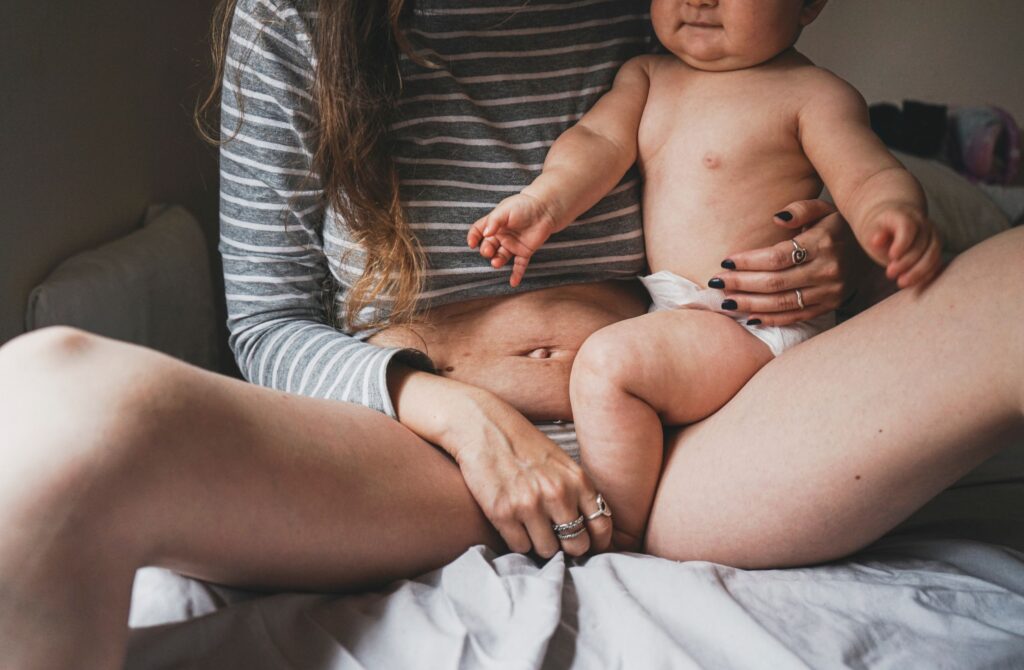
Postpartum sagging refers to the loss of firmness and tone in the skin and muscles after pregnancy. During pregnancy, the skin and tissues stretch significantly to accommodate the baby’s growth. After childbirth, it may be difficult for the skin and muscles to fully recover their elasticity, resulting in a sagging appearance, especially in the abdomen, breasts, thighs and arms.
What are the main causes of postpartum sagging?
Some possible causes of sagging after childbirth include:
- Stretching of the skin and muscles – The growth of the belly during pregnancy stretches the skin and abdominal muscles, which may cause sagging after childbirth, especially if there is abdominal diastasis, meaning separation of the rectus abdominis muscles.
- Hormonal changes – During pregnancy, oestrogen and progesterone levels increase, promoting skin elasticity. After childbirth, these hormones decrease, reducing the production of collagen and elastin, which are essential for skin firmness.
- Weight gain and weight loss – Weight gain during pregnancy, followed by rapid weight loss after childbirth, can affect the skin’s elasticity, making it more saggy.
- Genetic factors – Genetic predisposition plays an important role in the recovery of skin firmness, as some women are more prone to developing sagging than others.
- Weakening of the abdominal and pelvic floor muscles – Pregnancy can weaken the core and pelvic floor muscles, contributing to a sagging appearance in the abdomen.
- Lack of physical exercise – Lack of physical activity during and after pregnancy can lead to loss of muscle tone, worsening sagging.
- Breastfeeding – The reduction in breast volume after breastfeeding may result in breast sagging, as the skin may not fully adapt to the new shape.
Frequently Asked Questions
How can I lose a sagging belly or excess skin after pregnancy?
Reducing a sagging belly or excess skin after pregnancy may require a combination of healthy habits and, in some cases, specific treatments. Some effective strategies include:
- Balanced diet – A diet rich in protein, vitamins and antioxidants can help stimulate collagen and elastin production, improving skin firmness.
- Physical exercise – Core-strengthening exercises, such as Pilates, hypopressive exercises and resistance training, can help tone the abdominal muscles.
- Hydration and skincare – Keeping the skin hydrated and using creams with active ingredients such as hyaluronic acid and Centella asiatica may help improve elasticity.
- Aesthetic treatments – Surgical or non-surgical treatments may be recommended according to your preferences and the doctor’s advice.
If you have postpartum abdominal sagging, book a consultation at Living Clinic for a personalised assessment and discover the most suitable treatment for your case.
How long does it take to lose belly fat after childbirth?
The time needed to lose the belly “naturally” after childbirth varies from woman to woman and depends on factors such as genetics, diet, physical activity and whether or not there is abdominal diastasis.
First few weeks – During the first 6 to 8 weeks, the uterus gradually shrinks back to its pre-pregnancy size. Some women already notice a significant reduction in the belly during this period.
First few months – If there is fluid retention, it tends to decrease during the first 3 months. Breastfeeding may also help burn calories and support this process.
6 months to 1 year – With a healthy diet and exercise routine, many women are able to regain a firmer belly within this period. However, if there is significant sagging or abdominal diastasis, more time or specific interventions may be needed.
If, despite your efforts, your belly still shows sagging or excess skin, treatments such as those mentioned above may be good options to support your recovery.
Does wearing a postpartum belly band help reduce abdominal sagging?
A postpartum belly band can provide temporary support, but it does not reduce abdominal sagging in the long term.
Its main benefit is that it supports the abdominal muscles and lower back, providing greater comfort after childbirth. It may also help improve posture and reduce lower back discomfort. However, it does not strengthen the muscles and prolonged use may even weaken them if it is not combined with appropriate exercises. In addition, a belly band does not eliminate fat or excess skin.
Can postpartum belly sagging be related to abdominal diastasis?
Yes. In some cases, a sagging or protruding belly after pregnancy may be associated with abdominal diastasis, which is the separation of the rectus abdominis muscles. However, skin laxity, localised fat and loss of muscle tone can also contribute to this change.
For this reason, we recommend a specialised assessment to understand the cause of the concern and define the most suitable treatment.
When can I start treatments for belly sagging after childbirth?
The ideal time to start treatments depends on the type of delivery, your body’s recovery, the presence of abdominal diastasis, breastfeeding and the treatment recommended.
At Living Clinic, we always assess each case before recommending any procedure, ensuring that the treatment plan is safe, suitable and adapted to your postpartum recovery stage.
Is it possible to treat postpartum abdominal sagging without surgery?
Yes. In many cases, it is possible to improve skin firmness, muscle tone and abdominal contour with non-surgical treatments. Technologies such as body radiofrequency, EMSCULPT NEO, EMTONE or Morpheus8 may be options, depending on each person’s needs.
When there is significant excess skin or more pronounced abdominal diastasis, a surgical approach, such as abdominoplasty, may need to be considered.
Can I have treatments for abdominal sagging while breastfeeding?
It depends on the treatment. During breastfeeding, some procedures may need to be postponed or adapted to ensure greater safety and comfort.
For this reason, we recommend a consultation to understand your postpartum stage and identify the most appropriate treatments for your case.
Specialists
Where can I have treatment for postpartum belly sagging in Porto?
You can have your postpartum belly sagging treatment at Living Clinic, located at Av. da Boavista 117, 6th floor, Room 607, 4050-115 Porto, Portugal.
Schedule a consultation to hear our recommendation for your specific case and clarify all your questions.