Skip to content
Hyperpigmentation
Practical Information
- Fractional CO2 Laser;
- Morpheus8;
- Chemical Peel;
- Dermatological Creams.
Click here to scroll down to the specialists’ section.

Skin Hyperpigmentation Treatments
Living Clinic offers safe and effective treatments to help reduce and even out irregular skin pigmentation, including:
1. Fractional CO2 Laser
Fractional CO2 Laser is an advanced treatment that uses a laser beam to create micro-perforations in the skin, stimulating cell renewal and collagen production. This helps lighten areas of hyperpigmentation and improve skin texture.
2. Morpheus8 (microneedling combined with radiofrequency)
Morpheus8 is an innovative treatment that combines microneedling and radiofrequency to treat hyperpigmentation, stimulating deep skin regeneration and evening out skin tone, while also improving firmness and texture.
3. Chemical Peel
Chemical Peel is a procedure that uses specific acids to remove the superficial layers of the skin, promoting cell renewal and lightening dark spots, making the skin tone more even.
4. Dermatological Creams
Topical products prescribed by the dermatologist, rich in ingredients such as hydroquinone, azelaic acid or retinoids, help gradually reduce hyperpigmentation and prevent the appearance of new dark spots.
Note: A specialized dermatological evaluation will always be carried out so that we can recommend the most suitable solution for your specific case (which may be one of the treatments mentioned above or another recommended by the doctor).
What is the price of skin hyperpigmentation treatments?
There will always be a prior assessment so that the doctor can recommend the most suitable hyperpigmentation treatment for your specific case, as well as the corresponding price.
Prices may vary depending on the type of treatment and its complexity.
Schedule an evaluation to receive a personalised quote.
What our clients say about us
“I couldn’t thank Dr. Paola (dermatologist) enough for her care and kindness. She explained the procedure (CO2 laser) to me, the post-procedure care, and answered my questions. I had already had the same procedure at another clinic, but it didn’t compare to the treatment I received with this doctor…she was very dedicated and friendly. And […]
“I really enjoyed my experience at this clinic. The staff is conscientious and professional. The results were excellent and they give us a realistic view of what’s expected so we can manage expectations. I’m really satisfied!”
“Dr. Francisco Martins De Carvalho doesn’t overlook the smallest detail. He seeks perfection and finds it. A unique and sublime talent. I woke up with the body of a teenager (I’m 41). Thank you for making me smile.”
“My husband and I were seen by Dr. Paola, who was wonderful and very attentive to every detail. I highly recommend her.”
“I’ve been coming here for a while now and love my experience. The people are accommodating friendly and very professional. I’m happy with the results and it has lived up to my expectations! I shall continue to visit this clinic and I highly recommend it.”
“Super professional and top-quality team. I saw results after the first session.”
“One of the best surgeons, I’m so grateful for the excellent work he did with me! A perfectionist!! I couldn’t be happier with the results! Thank you, Dr. Francisco Carvalho!”
About Skin Hyperpigmentation
What is skin hyperpigmentation?
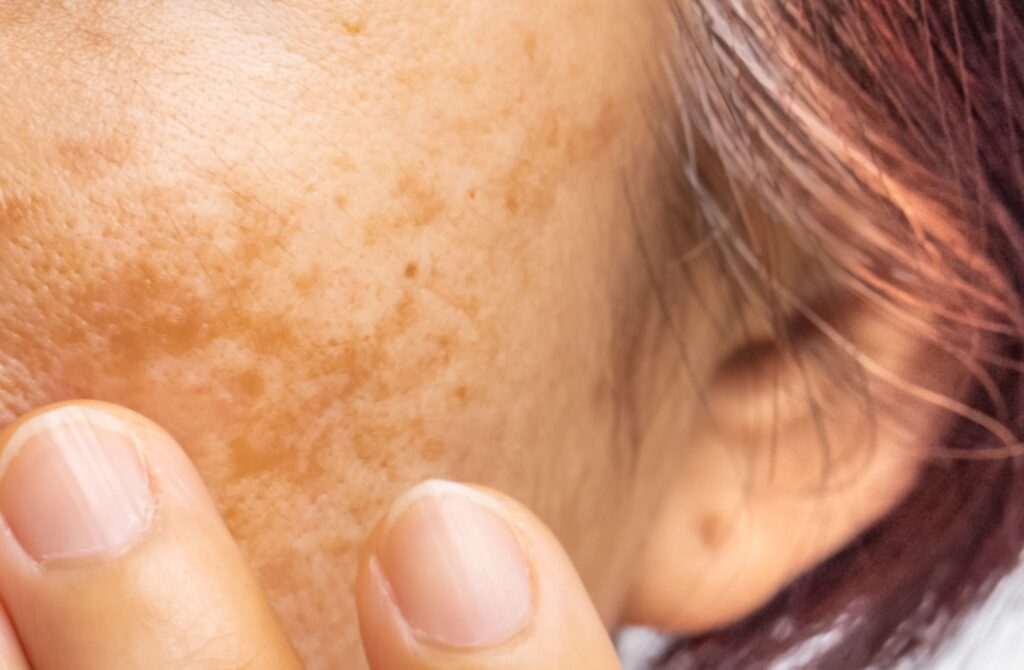
Skin hyperpigmentation is a condition in which there is an increase in the production or deposit of melanin, the pigment responsible for skin colour. This results in dark, irregular or brownish spots that may appear on various areas of the body, including the face.
Hyperpigmentation can be triggered by several factors, including sun exposure, inflammation, hormonal changes and skin injuries.
Although it is generally not harmful to health, hyperpigmentation can affect people’s self-esteem and confidence.
What are the causes of hyperpigmentation?
Skin hyperpigmentation can have several causes, including:
- Sun exposure: Excessive and unprotected sun exposure is one of the main causes of hyperpigmentation. Ultraviolet rays stimulate melanin production as a way of protecting the skin against sun damage;
- Hormonal changes: Hormones, such as oestrogen, can cause dark, irregular spots known as melasma, often associated with pregnancy or the use of contraceptives;
- Ageing: Over time, the skin can accumulate sun damage, leading to an irregular distribution of pigment;
- Inflammation: Skin lesions, such as acne or eczema, can trigger an inflammatory response that leads to post-inflammatory hyperpigmentation;
- Injuries and wounds: Scarring caused by injuries, wounds or surgery can result in hyperpigmentation in the affected area.
What types of skin hyperpigmentation are there?
The main types of skin hyperpigmentation are:
- Melasma: Melasma is a form of hyperpigmentation that often appears on the face, especially on the cheekbones, forehead, nose and chin. This type is often associated with hormonal changes, such as during pregnancy, known as the “pregnancy mask”, or the use of hormonal contraceptives. Sun exposure worsens melasma, making daily sunscreen use essential.
- Post-inflammatory hyperpigmentation (PIH): PIH appears after the skin has suffered an injury or inflammation, such as acne, cuts, burns or even more aggressive dermatological procedures. This condition is more common in darker skin tones and can be worsened by sun exposure.
- Solar lentigines (age spots): Solar lentigines are dark spots caused by prolonged sun exposure over the years. They usually appear on exposed areas, such as the face, hands and arms, and are more common in older people. Although they are harmless, they can be treated for aesthetic reasons.
- Ephelides (freckles): Although freckles are not technically a medical condition, they are considered a form of hyperpigmentation. They tend to appear in people with fair skin and are caused by genetic predisposition and sun exposure.
- Hyperpigmentation caused by medication or medical conditions: Some medications, such as certain antibiotics and chemotherapy drugs, can cause hyperpigmentation as a side effect. In addition, conditions such as Addison’s disease or metabolic disorders can contribute to skin darkening.
Frequently Asked Questions
Does hyperpigmentation go away on its own?
In some cases, such as post-inflammatory hyperpigmentation, dark spots may gradually fade, especially if the cause is removed, for example, once acne has healed. However, other forms, such as melasma or solar lentigines, may persist or even worsen without appropriate treatment.
Does sun exposure worsen hyperpigmentation?
Yes, sun exposure is one of the main factors that can worsen hyperpigmentation. Daily use of a high-factor sunscreen, preferably SPF 50+, is essential to prevent dark spots from becoming darker and to help prevent the formation of new ones.
Are hyperpigmentation treatments safe for all skin types?
Yes, but the approach may vary. At Living Clinic, we assess each patient’s skin tone and skin type to recommend the safest and most effective treatment, while minimising the risk of adverse effects, such as post-inflammatory hyperpigmentation in darker skin tones.
Can hyperpigmentation return after treatment?
Yes, this can happen, especially if triggering factors, such as sun exposure, are not controlled. To help prevent recurrence, it is essential to maintain a strict skincare routine, including:
- Continuous use of sunscreen;
- Maintenance products recommended by the dermatologist;
- Maintenance sessions, if recommended by the dermatologist.
How can hyperpigmentation spots be removed?
The removal or reduction of dark spots depends on the type of hyperpigmentation, the depth of the spot and the associated cause.
At Living Clinic, treatment may include Fractional CO2 Laser, Morpheus8, Chemical Peel or prescribed dermatological creams, according to the medical assessment. In some cases, a combination of treatments may be necessary to achieve a more even and progressive result.
What causes excess melanin in the skin?
Excess melanin can be caused by several factors, such as sun exposure, hormonal changes, ageing, acne, inflammation, skin injuries, certain medications or specific medical conditions.
When there is excessive production or irregular accumulation of melanin, dark or brownish spots appear on the skin. Identifying the cause is essential to choose the most suitable treatment and prevent hyperpigmentation from worsening.
Specialists
Where to have skin hyperpigmentation treatment in Porto?
You can have skin hyperpigmentation treatment at Living Clinic, located at Av. da Boavista 117, 6th floor, Room 607, 4050-115 Porto, Portugal.
Schedule a consultation to hear our recommendation for your specific case and clarify all your questions.