Skip to content

Practical Information
- Eyelid Surgery (Blepharoplasty)
- CO2 Laser (Non-Surgical Blepharoplasty)
Click here to scroll down to the specialists’ section.
Treatments for Droopy Eyelids
Droopy eyelids can have different causes and degrees of severity, so the most appropriate treatment should be determined according to the characteristics of each case. At Living Clinic, we assess the eye area on a personalised basis in order to recommend the most suitable approach, whether surgical or non-surgical.
1. Eyelid Surgery (Blepharoplasty)
Blepharoplasty involves correcting the eyelid muscle, excess skin and fat. This procedure helps to restore harmony and rejuvenation to the eye area and, consequently, to the face as a whole.
Eyelid surgery is a relatively quick procedure, with a straightforward recovery period and long-lasting results.
The procedure is performed on an outpatient basis and is usually carried out under local anaesthesia, as it is generally very well tolerated.
As soon as the surgery is completed, the patient must remain at rest for at least one hour and apply cold compresses to the treated area. During the post-operative period, the patient will usually take mild oral pain relief, use antibiotic eye drops several times a day and apply an antibiotic ointment before going to bed.
The patient may return to work between the 3rd and 5th day after surgery.
Scarring is an inevitable result of any surgical procedure. Your Living Clinic plastic surgeon will make every effort to ensure that the final scar is as discreet as possible. The scars are placed along the natural skin lines and become less noticeable over time. In the upper eyelid, the scar is hidden in the eyelid crease and, in the lower eyelid, it is placed inside the conjunctiva.
For improved results and in selected cases, blepharoplasty may be performed in combination with a surgical facelift.
The procedure is performed by Living Clinic’s plastic surgeon, Dr Francisco Martins de Carvalho.
2. CO2 Laser (Non-Surgical Blepharoplasty)
Eyelid laxity can also be treated with laser technology (Fractional CO2 Laser). However, while surgical blepharoplasty treats the entire drooping eyelid, including deeper structures such as the muscle and fascia, CO2 laser only treats the skin, at a more superficial level, leaving it smoother and firmer.
Fractional CO2 laser emits concentrated beams of light that safely penetrate the eyelid skin. This laser stimulates collagen production and promotes skin regeneration in the treated area.
After the treatment, it is normal for the eyelid skin to become red and swollen. In the following days, these symptoms gradually subside and the skin begins to peel, revealing a new, firmer layer of skin.
The results of fractional CO2 laser treatment on the eyelids are not immediate, but improve progressively as collagen is produced and the skin regenerates.
Several treatment sessions may be needed to achieve the desired results. The number of sessions varies from person to person. You should schedule a consultation to receive a personalised treatment plan.
Fractional CO2 laser is one of the most sought-after non-surgical treatments for facial rejuvenation. This technology can also be used to treat other facial concerns, such as skin pigmentation, acne, acne scars and other scars, wrinkles and fine lines, and facial skin laxity.
The choice between these treatments depends on the degree of eyelid laxity, the desired results, the recovery time and the medical assessment of each case. At Living Clinic, we recommend the most appropriate option based on the characteristics of the eyelid, your medical history and your expectations.
Droopy Eyelid Surgery Before and After
What is the cost of treatment for droopy eyelids?
The price of treatment for droopy eyelids depends on the method used and may vary from case to case, so a personalised medical assessment is required.
Schedule a consultation to receive a quote and clarify any questions you may have.
What our clients say about us
“I couldn’t thank Dr. Paola (dermatologist) enough for her care and kindness. She explained the procedure (CO2 laser) to me, the post-procedure care, and answered my questions. I had already had the same procedure at another clinic, but it didn’t compare to the treatment I received with this doctor…she was very dedicated and friendly. And […]
“I really enjoyed my experience at this clinic. The staff is conscientious and professional. The results were excellent and they give us a realistic view of what’s expected so we can manage expectations. I’m really satisfied!”
“Dr. Francisco Martins De Carvalho doesn’t overlook the smallest detail. He seeks perfection and finds it. A unique and sublime talent. I woke up with the body of a teenager (I’m 41). Thank you for making me smile.”
“My husband and I were seen by Dr. Paola, who was wonderful and very attentive to every detail. I highly recommend her.”
“I’ve been coming here for a while now and love my experience. The people are accommodating friendly and very professional. I’m happy with the results and it has lived up to my expectations! I shall continue to visit this clinic and I highly recommend it.”
“Super professional and top-quality team. I saw results after the first session.”
“One of the best surgeons, I’m so grateful for the excellent work he did with me! A perfectionist!! I couldn’t be happier with the results! Thank you, Dr. Francisco Carvalho!”
About Droopy Eyelids (Ptosis)
What is eyelid ptosis?
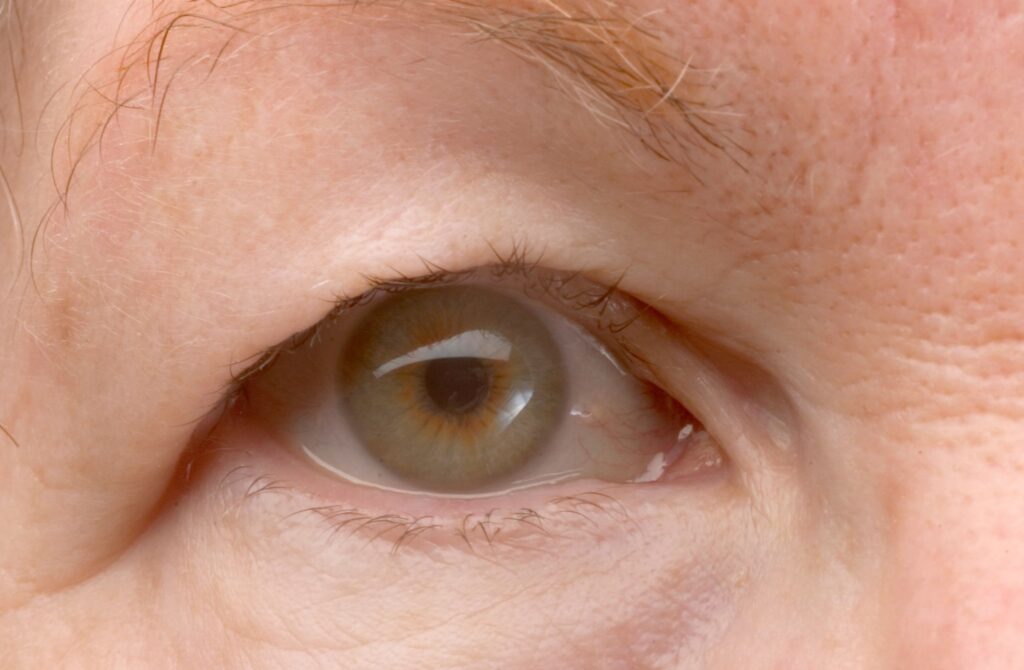
Droopy eyelids, or eyelid ptosis, consist of the drooping of the upper eyelid and are very common at older ages.
Droopy eyelids can affect not only facial aesthetics but also, in some cases, the field of vision.
What are the causes of droopy eyelids?
One of the main causes of droopy eyelids is related to ageing. As we grow older, the muscles and tissues that support the eyelids can weaken, leading to a more aged appearance.
However, eyelid ptosis can also be caused by factors other than ageing, as we will see below.
Eyelid ptosis can be classified in two ways:
1. Congenital eyelid ptosis
Congenital eyelid ptosis is present from birth. It is usually caused by underdevelopment of the muscles that lift the upper eyelid or by an abnormal connection between these muscles and the nerves that control them.
Babies or children with congenital eyelid ptosis may have a drooping upper eyelid in one or both eyes.
2. Acquired eyelid ptosis
Acquired eyelid ptosis develops over time and its causes can vary. Skin ageing, and the resulting laxity, is one of the most common causes and is the situation in which reconstructive surgery may help. However, other causes may also exist, such as injuries or trauma, muscle diseases, adverse effects of certain medications or, in the case of neuropathic ptosis, neurological conditions such as Horner syndrome, multiple sclerosis, Guillain-Barré syndrome, third cranial nerve palsy, among others.
Frequently Asked Questions
Does surgery for droopy eyelids leave visible scars?
Yes, scarring is an inevitable result of any surgical procedure. However, we do everything possible to make the scars as discreet as possible and, after a few weeks, they tend to become almost imperceptible. In the upper eyelid, the scar is hidden in the natural eyelid crease and, in the lower eyelid, it may be placed inside the conjunctiva.
Does CO2 laser replace surgery for droopy eyelids?
No. Surgical blepharoplasty treats the entire drooping eyelid, including deeper structures such as the muscle and fascia. CO2 laser, on the other hand, only acts on the skin, at a more superficial level.
Is surgery for droopy eyelids performed under anaesthesia?
Yes. The procedure is performed on an outpatient basis and is usually carried out under local anaesthesia, which is generally very well tolerated.
Can droopy eyelids affect vision?
Yes. In addition to the aesthetic impact, droopy eyelids may, in some cases, affect the visual field.
How many CO2 laser sessions are needed to treat droopy eyelids?
More than one session may be required. The number of sessions varies from person to person and is defined according to a personalised treatment plan.
Does blepharoplasty provide long-lasting results?
Yes. Eyelid surgery is a quick procedure, with a relatively straightforward recovery period, and offers long-lasting results.
Are the results of CO2 laser treatment on the eyelids immediate?
No. The results of CO2 laser treatment are not immediate; they improve progressively as collagen is produced and the skin regenerates.
Can blepharoplasty be combined with other procedures?
Yes. For improved results and in selected cases, blepharoplasty may be performed at the same time as a surgical facelift.
Do droopy eyelids only happen with ageing?
No. Although they are more common at older ages, droopy eyelids may also have a congenital or acquired cause.
Specialists
Where to have treatment for droopy eyelids in Porto?
You can have treatment for droopy eyelids at Living Clinic, located at Av. da Boavista 117, 6th Floor, Room 607, 4050-115 Porto, Portugal.
Schedule a consultation to hear our recommendation for your specific case and clarify all your questions.